

Planning more than a beach holiday? Many foreigners now come to Phu Quoc for months at a time. Some work remotely. Others take a local job, open a business, or move with family. Each path needs the right Phu Quoc visa, and some need a work permit too.
This guide covers the entry options, the work permit rules under the latest decree, and what they mean for your rental. It is written for digital nomads, foreign employees, retirees, and families planning a stay of one month or longer.
One update first. Since 1 July 2025, Phu Quoc is a special zone of An Giang province. Kien Giang province merged into An Giang on that date. Any paperwork that needs a provincial office now goes through An Giang authorities.
Visa rules in Vietnam change often. Confirm the details with the Immigration Department, your employer, or a licensed advisor before you book.
Table of Contents
Phu Quoc Visa Options at a Glance
Your best option depends on three things: your passport, your length of stay, and whether you will work.
| Option | Max stay | Who it suits | Can you leave Phu Quoc? | Can you work? |
|---|---|---|---|---|
| Phu Quoc 30 day exemption | 30 days | Short stays on the island only | No | No |
| 45 day national exemption | 45 days | 24 eligible countries | Yes | No |
| E-visa | Up to 90 days | Almost every nationality | Yes | No |
| Work visa (LD1 or LD2) | Up to 2 years | Foreign employees and some investors | Yes | Yes |
The 30 Day Phu Quoc Visa Exemption
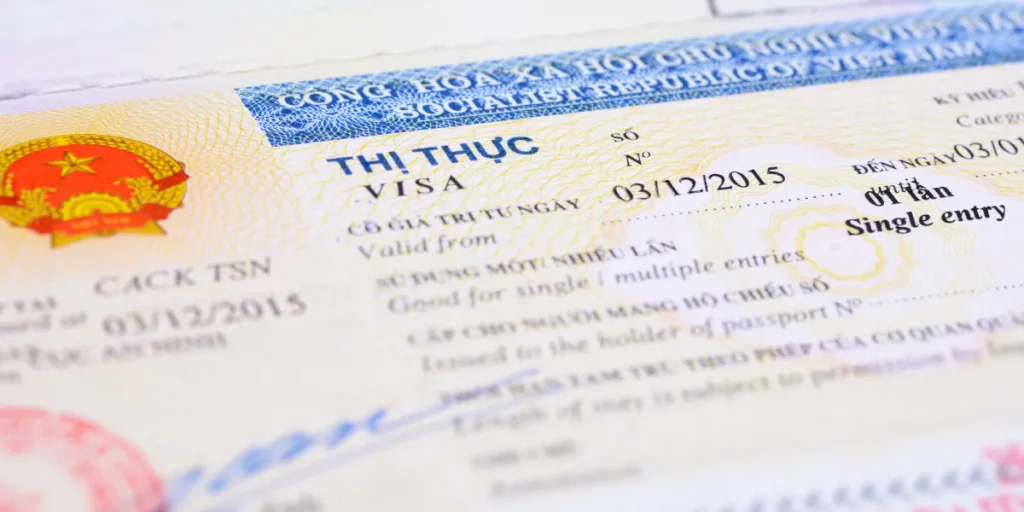
Phu Quoc has its own visa free policy. Foreigners of any nationality can stay on the island for up to 30 days without a visa. The legal basis is the 2019 amendment to Vietnam’s Law on Entry, Exit, Transit and Residence of Foreigners, in force since 1 July 2020.
Conditions you must meet
- Arrive from abroad. Fly or sail into Phu Quoc directly from outside Vietnam.
- Transit carefully. A connection through Hanoi or Ho Chi Minh City works only if you stay in the international transit area. A domestic flight before Phu Quoc cancels the exemption.
- Stay on the island. The exemption covers Phu Quoc only. You cannot travel to mainland Vietnam on it.
- Show an onward ticket. Airlines and border officers expect proof that you will leave Phu Quoc within 30 days.
Common mistakes
A side trip to Saigon is the most common error. One mainland stop turns a visa free trip into one that needs a full Vietnam visa. Many travelers also assume they can extend the 30 days. Plan as if you cannot.
For monthly renters, 30 days is tight. Most rental contracts run one month or longer. If you want flexibility, choose one of the options below.
Vietnam Visa Options for Stays Longer Than 30 Days
45 day visa exemption
Citizens of 24 countries can enter Vietnam without a visa for up to 45 days. The list comes from two government resolutions:
- Resolution 44/NQ-CP, valid until 14 March 2028: United Kingdom, Germany, France, Italy, Spain, Russia, Japan, South Korea, Denmark, Sweden, Norway, and Finland. Any travel purpose applies.
- Resolution 229/NQ-CP, valid until 14 August 2028: Belgium, Bulgaria, Croatia, Czech Republic, Hungary, Luxembourg, Netherlands, Poland, Romania, Slovakia, Slovenia, and Switzerland. This group covers tourism.
Passport holders from the United States, Canada, Australia, and India are not on either list. They need an e-visa.
90 day e-visa
The e-visa is the standard Vietnam visa for longer stays. Key facts:
- Validity: up to 90 days
- Entry type: single or multiple entry
- Government fee: US$25 for single entry and US$50 for multiple entry
- Where to apply: the official portal at evisa.gov.vn
- Processing: usually 3 to 5 working days
- Refunds: the fee is not returned if your application is refused
Apply on the official portal to avoid agency markups. Many agency sites look official but add large service fees on top.
Which option fits your rental?
- 1 month stay: the 30 day exemption may work if you never leave the island. A 45 day exemption gives more breathing room.
- 2 to 3 month stay: a 90 day e-visa matches most furnished monthly apartments on the island.
- Longer stays: you will need a new e-visa after each 90 day period, or a work or investor route.
Remote workers weighing these choices can compare island life in our guide for digital nomads in Phu Quoc.
Work Permits in Phu Quoc Under Decree 219/2025
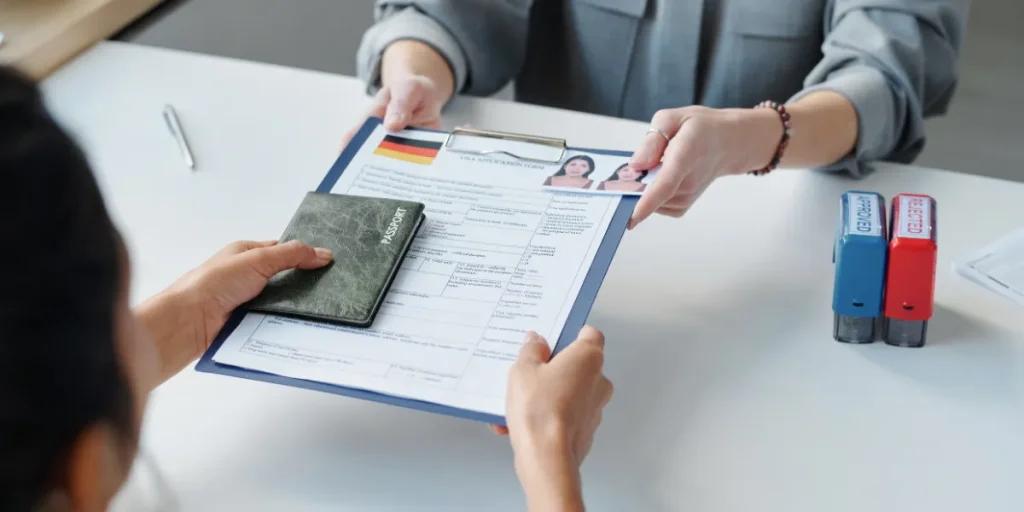
A tourist entry does not allow local employment. To work for a Vietnamese employer, you need a work permit or a confirmed exemption. Decree 219/2025/ND-CP sets the current rules. It took effect on 7 August 2025.
Who issues the permit
The Provincial People’s Committee issues work permits where the employer is based. For a Phu Quoc employer, that means An Giang province. The authority has 10 working days to decide once it receives a complete dossier.
The four worker categories
- Manager
- Executive director (CEO)
- Expert: a university degree plus at least 2 years of relevant experience. In priority sectors such as finance, technology, innovation, and digital transformation, a relevant degree plus 1 year is enough.
- Technical worker: at least 1 year of training plus 2 years of experience, or at least 3 years of relevant experience.
Who is exempt
Decree 219 lists 15 exemption cases. The most relevant ones for Phu Quoc newcomers:
- Short assignments: managers, executives, experts, and technical workers who work under 90 days in total per calendar year
- Company owners: owners or members of a limited liability company with a capital contribution of VND 3 billion or more
- Board members: chairpersons or board members of a joint stock company with the same capital threshold
Exempt workers still need a confirmation of exemption in most cases. Investors who plan to trade from a storefront can browse shophouses in An Thoi and other business districts.
Documents to prepare
- Application form, filed by the employer
- Health certificate from a licensed medical facility. A foreign certificate must be under 12 months old and come from a country that has a recognition agreement with Vietnam.
- Criminal record certificate issued no more than 6 months before submission
- Proof of degree and work experience
- Recent passport photos
- Legalized and translated copies of foreign documents
How long a permit lasts
A work permit is valid for up to 2 years. The exact term follows your labor contract or assignment letter.
Work Visas (LD1, LD2) and the Temporary Residence Card
A work permit lets you work. A work visa lets you stay. You need both.
| Visa | For whom | Max validity |
|---|---|---|
| LD1 | Workers exempt from a work permit | 2 years |
| LD2 | Workers holding a work permit | 2 years |
With an LD visa, most workers can apply for a Temporary Residence Card (TRC). For LD holders, the card cannot outlast the work permit, so it runs up to 2 years. A TRC replaces the visa and lets you leave and enter Vietnam freely. We will cover the TRC process step by step in a separate guide.
Planning to open your own company instead? Business setup follows a different path, with investor visas and capital rules. That topic also gets its own guide.

Practical Tips for Renting Legally on a Visa
Your landlord must register your stay
Vietnamese law requires the owner or manager of your home to declare foreign tenants to local police. The deadline is 12 hours after you arrive, or 24 hours in remote areas. This rule comes from Article 33 of the 2014 Law on Entry and Exit. It applies to apartments and private houses, not just hotels. Owners can file online through the provincial immigration police portal.
Bring your passport and visa page on move in day. A reliable landlord will ask for them. If a landlord skips this step, the risk falls on both of you.
Match your lease to your visa
- Check that your visa covers the full lease term before you sign.
- Ask for a break clause if your visa or work permit is still pending.
- Keep copies of your lease. Immigration offices may ask for proof of address.
Our step by step guide to renting a long term apartment explains contracts, deposits, and viewings in more detail.
Pick a home type that fits your status
- E-visa holders: monthly apartments offer the most flexibility.
- Families on longer stays: family pool villas near the beach give space for children and visiting relatives.
- Work permit holders: houses on a one year lease suit settled routines. PRP houses require a minimum rental term of one year.
Not sure which part of the island suits your commute? See our area guide for long stays in Phu Quoc.
Phu Quoc Visa FAQ
Can I extend the 30 day Phu Quoc exemption?
Plan as if you cannot. To stay longer or visit the mainland, apply for an e-visa on the official portal. Allow several working days for approval.
Can I take a job in Phu Quoc on an e-visa?
No. Local employment needs a work permit or a confirmed exemption, plus an LD1 or LD2 visa. Your employer sponsors the process.
Do I need a work permit for a short project?
Possibly not. Under Decree 219, work totaling under 90 days per calendar year is exempt. Your employer must still notify the authorities before you start.
Which office handles work permits for Phu Quoc now?
The An Giang Provincial People’s Committee, or the body it delegates. This changed after the July 2025 provincial merger.
Does a multiple entry e-visa help with day trips abroad?
Yes. A multiple entry e-visa lets you leave and return within its 90 day validity. A single entry e-visa ends once you exit Vietnam.
Find Your Phu Quoc Home with PRP
Your visa decides how long you can stay. Your home decides how well you live. PRP helps expats, remote workers, and foreign employees find mid term and long term rentals across the island.
Browse our apartments for rent in Phu Quoc, or message us on WhatsApp to find a lease that fits your stay.
WhatsApp: +84 902 407 024

